by Véto-pharma
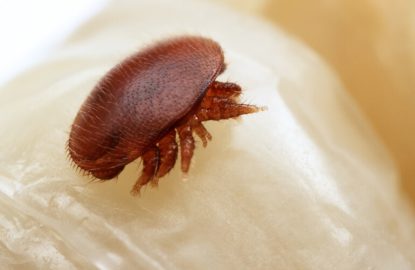
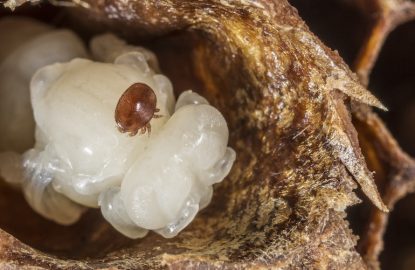
 By mid-season, Varroa pressure can climb fast. Brood is at its peak, mite reproduction accelerates with every brood cycle, and the gap between “manageable” and “out of control” can close in a matter of weeks.
But here’s the problem most beekeepers run into: by the time you spot the damage, it’s already too late. And waiting for the end-of-season treatment window means letting mites multiply unchecked through your most productive months.
This is exactly where a flash treatment between honey flows makes sense. In this guide, we’ll walk you through when, why, and how to use Amiflex (Canada) / Amiflex 2.0 (USA) to lower mite infestation during the season without disrupting your honey production.
Varroa populations don’t wait for your end-of-season treatment window. According to the Honey Bee Health Coalition (HBHC), in colonies with brood, uncontrolled mite populations can double monthly. That doubling is exactly what catches beekeepers off guard between June and August.
The HBHC recommends Varroa treatment thresholds based on the colony phase. During the Peak Population phase, which corresponds to mid-season in most North American operations, any colony with a Varroa mite level above 2% infestation (2 mites per 100 adult bees) should be treated promptly.
This is a problem if you still have a honey flow coming up. Most Varroa treatments either take weeks to act, require honey supers to be removed for an extended period, or come with temperature constraints in use that don’t match summer conditions. The result: many beekeepers postpone treatment, hoping the bees will “hold on” until the end of the season and the reality is that they rarely do.1
This is where a flash treatment changes the game.
A flash treatment is a short application that hits the mite population fast, decreasing phoretic mite levels in a short period of time It is commonly used during the honey flow season.
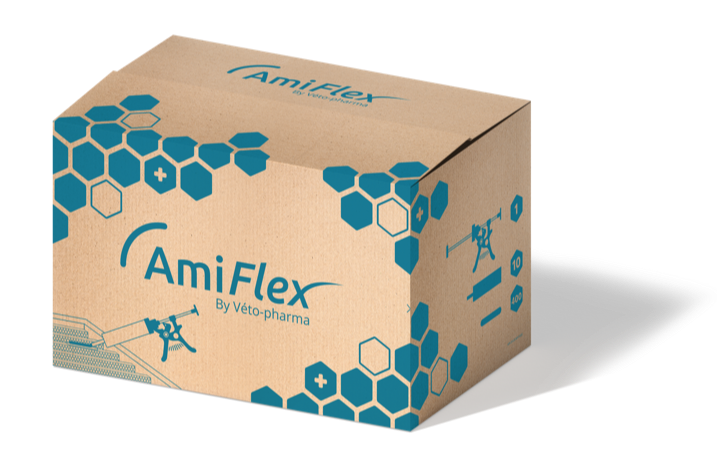
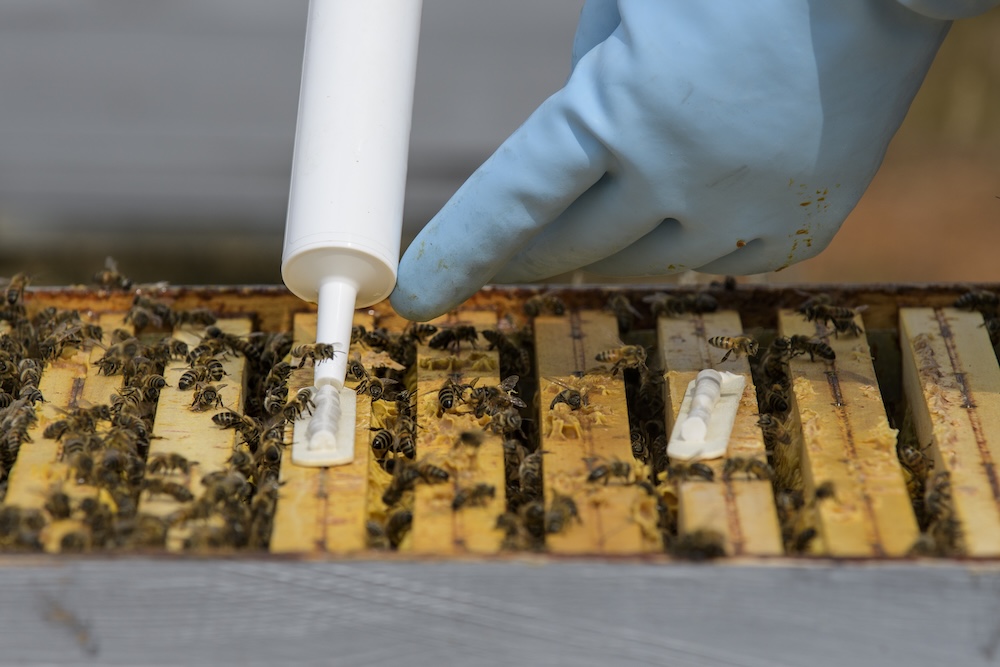
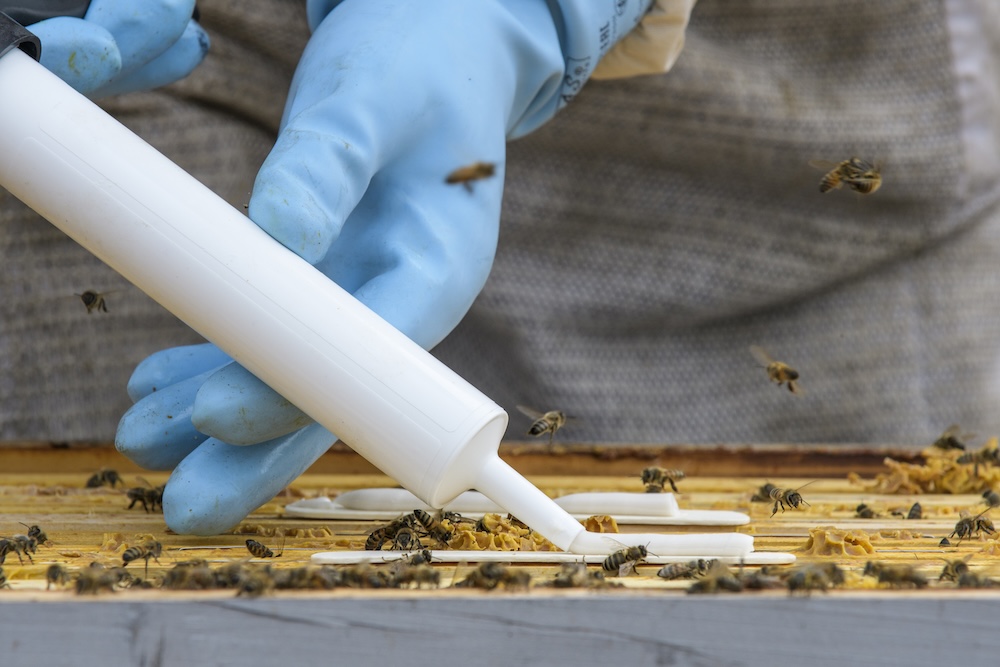
Our Amiflex / Amiflex 2.0 is an amitraz-based gel flash treatment. It is a one 7-day treatment application of two doses of 3 mL per brood box on the brood frames applied with a pre-loaded dosing gun on flat wooden sticks. After 7 days, you remove the wooden sticks along with any remaining gel, and you’re done! You can put your honey supers back on the same day.
This flash treatment is the right tool for a specific job: reducing mite infestation during the season, between two honey flows, or right before your end-of-season treatment. Note that this I not a replacement for your main treatment, it is an additional tool in your integrated varroa mite management strategy.
The good news: timing is flexible. You can apply Amiflex / Amiflex 2.0 immediately after removing your honey supers2. No need to wait. And once the 7-day treatment is over, you can put the supers back on right away. There’s no withdrawal period.
That means that a complete treatment cycle takes exactly 7 days from supers off to supers back on.
A few real-world examples:
The point isn’t the specific flow. The point is: if you have at least 7 days without honey supers, you have time for Amiflex / Amiflex 2.0.
This is where assessing your situation matters.
One application is the standard case. If your mite count is at or near the HBHC treatment threshold, a one 7-day application is enough to bring your colonies back under control before the next flow.
Two applications are recommended when infestation is high. If you observe an unusually mid-season high mite count closer to what you’d normally see at end-of-season, you’ll want a second application. Here’s the protocol:
This 21-day cycle covers a full Varroa reproductive cycle inside capped brood, giving you a more complete knock-down. Note: this counts as two of the maximum applications allowed per year.
It depends on whether brood is present or not.
When brood is present (which is the case in mid-season):
When brood is absent (typically late season or after a brood break):
This is why Amiflex / Amiflex 2.0 isn’t designed to replace your main end-of-season treatment. It’s the tool that effectively reduces the mite infestation pressure during the season so Amiflex / Amiflex 2.0 helps to prepare honey bee colonies for a successful overwintering.
Read entire label, use strictly in accordance with precautionary statements and directions, and with applicable provincial or territorial and federal regulations.
The application takes just a few minutes per hive. Here’s the process:
No temperature constraints during application. You can apply Amiflex / Amiflex 2.0 -under any weather conditions, as long as bees are active in the hive.
One note on storage: while there’s no temperature restriction during use, storage temperature does matter. Please read the label before storing your product.
For a complete step-by-step illustrated guide, download the Amiflex / Amiflex 2.0 practical sheet [USA version] [Canada version] or the corresponding fact sheet for Canada from your distributor.
Treating without checking the result is treating blindly. We recommend a post-treatment sampling to confirm that mite levels have dropped below threshold.
Use the Varroa EasyCheck tool with the alcohol wash method on a 300-bee sample. If your post-treatment count is still above threshold, you may need a second application or a complementary intervention.
Sampling before AND after every treatment is the foundation of any serious varroa management program.
A flash treatment isn’t a silver bullet. It’s one tool in your integrated varroa mite management toolbox, alongside:
Rotating active ingredients is essential to slow the development of resistance. Amiflex / Amiflex 2.0 uses amitraz, the same active ingredient as Apivar and Apivar 2.0, so it’s important to plan your season to alternate active ingredients across the year rather than relying on amitraz alone.
Want to build a complete varroa management strategy for the season? Download our integrated varroa mite management guide for a structured approach.
Got questions? Visit our FAQ page or contact our team.
Strong colonies start with smart varroa control. We’re here to help you get there.
2. As long as the bees are active, which is necessarily the case at this time of year.
3. Testapi. (2021). Assessment of effects of one or two applications of “FLASH” formulation on honeybee colonies in Dadant shaped hives and associated efficacy against Varroa destructor. GLP Study No. 514-2021.
4. Testapi. (2021). Assessment of effects of one or two applications of “FLASH” formulation on honeybee colonies in double Langstroth shaped hives and associated efficacy against Varroa destructor. GLP Study No. 552-2021.
5. Testapi. (2021). Assessment of effects of a single application of multiple doses of “FLASH” formulation on broodless honeybee colonies in Dadant and double Langstroth shaped hives and associated efficacy against Varroa destructor. GLP Study No. 507-2021.
AFX-26-IN-N01-06/26
 by Caroline Lantuejoul
  by Véto-pharma