by Véto-pharma
 At Véto-pharma, one of our key missions is to support beekeepers in the fight against varroa, a major parasite of honey bee colonies. To develop effective solutions, field trials in hives are essential: they make it possible to test products under real-life conditions of use. The quality of the results largely depends on how well the colonies are prepared before the trials begin. Below are some of the essential technical steps implemented by the team at our experimental apiary to successfully conduct these trials.
Selecting candidate colonies
The objective of the Bee Innovation team is to generate results that are representative of how the future product will be used by beekeepers.
At our Chaillac experimental apiary, we have chosen to standardise hive types as much as possible. We mainly work with 10-frame Dadant hives fitted with insulated partitions. We also have Langstroth hives, which are widely used in Anglo-Saxon countries.
The selected colonies are healthy (with no diseases other than those potentially linked to varroa), have a laying queen (presence of capped and open brood), and show good developmental dynamics. We use selected queens of the same age in order to minimise variability in the data generated.
Standardising colonies before the trial
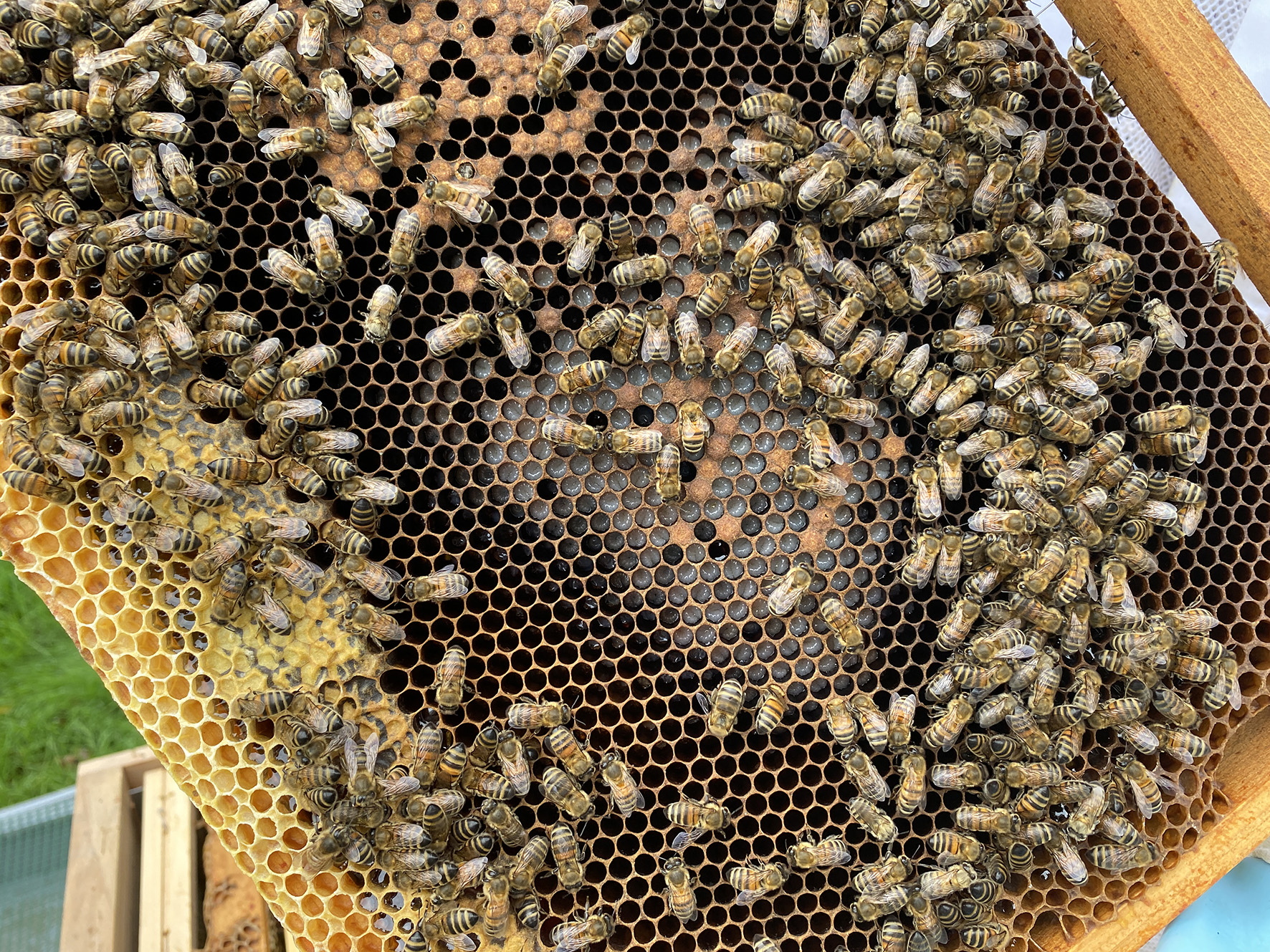
To limit bias in studies, the most important factor is the homogenisation of study groups. Most of our studies are therefore conducted on colonies with at least 4 brood frames, and rarely more than 6. The amount of stored resources (honey and pollen) is also important (on average 3 to 4 frames). These colonies are then distributed across the different groups.
For efficacy studies, particular attention is paid to varroa infestation levels. Two to three weeks before the start of the study, we monitor natural varroa mortality.
To remain as close as possible to real conditions of use, the resulting groups are homogeneous with each other, while generally including 50% medium-strength colonies, 25% weak colonies and 25% strong colonies.
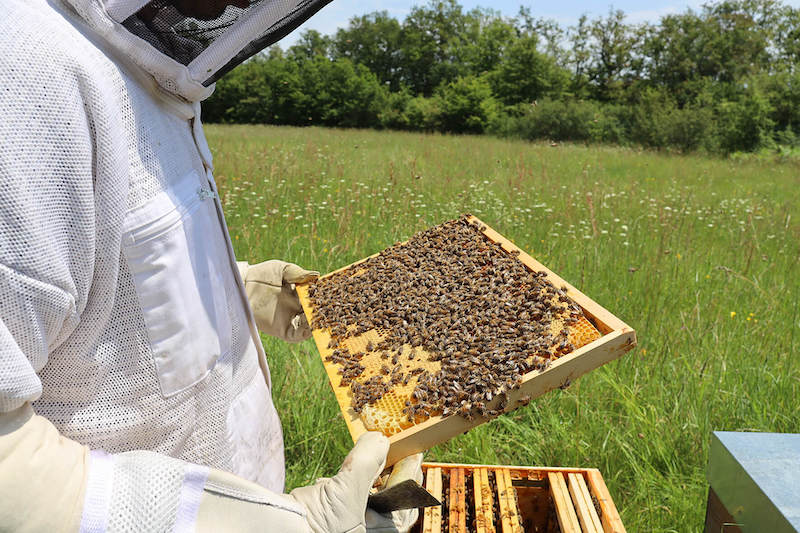
Colony strength is assessed using the ColEval method developed by ITSAP –the french national beekeeping institute. This technique estimates the surface area of frames occupied by bees, open brood, capped brood, honey and pollen.
Spatial and environmental organisation
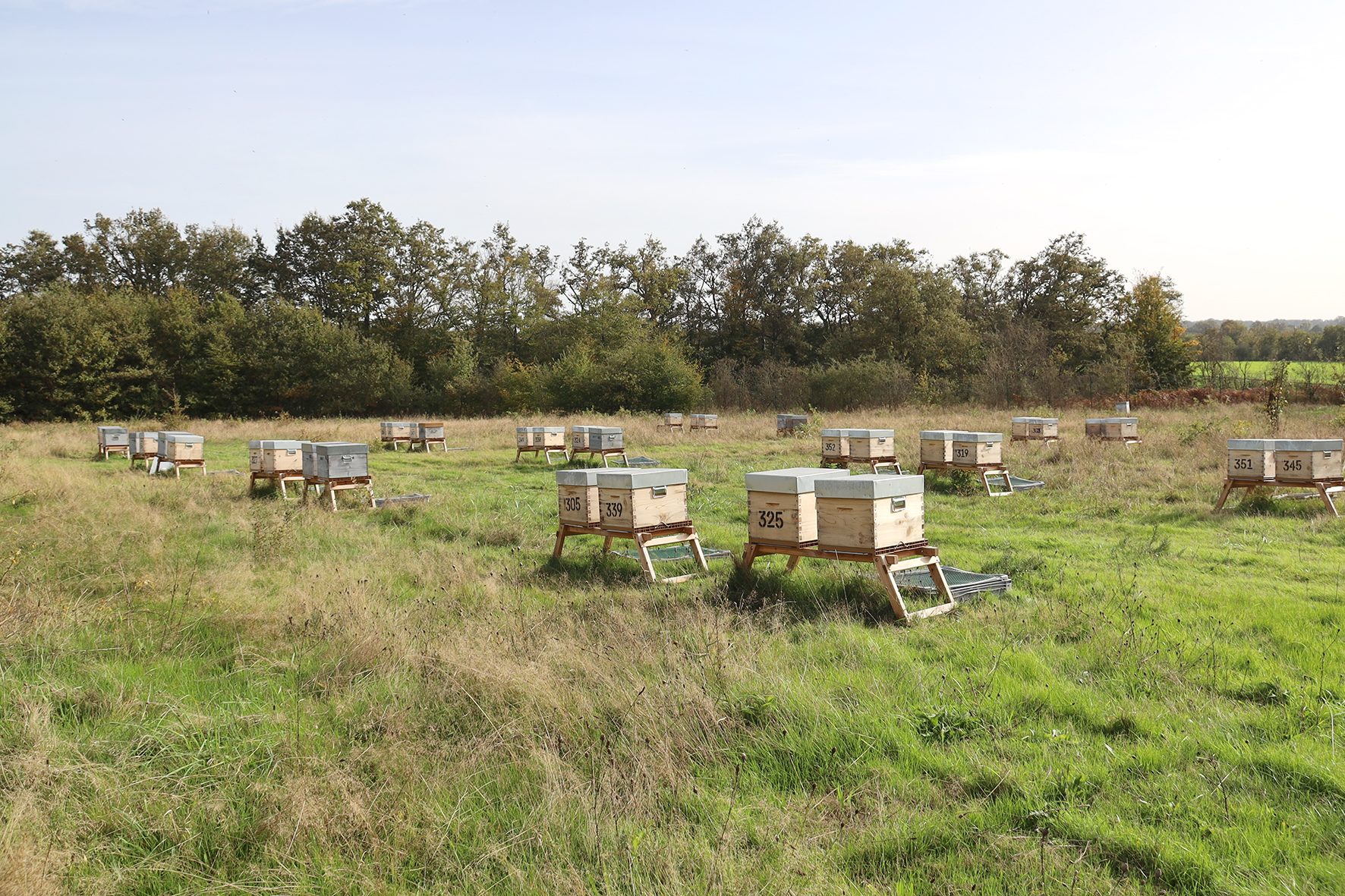
Apiaries are prepared to minimise drifting between hives and especially between groups. To achieve this, hives are spaced 2 metres apart within the same group, while different monitored groups are spaced at least 10 metres apart.
Implementing the experimental protocol
Once colony evaluations have been completed, colonies are distributed into the different groups to ensure homogeneity. Some variability between colonies always remains, but each hive is clearly identified to ensure accurate monitoring throughout the study period.
The treatments used, manufactured by our formulation team, are assigned a batch number and full traceability (formula, weighing, manufacturing date, etc.). These batch numbers are recorded and associated with a specific group. The number of applications, product dosage (for example, number of strips), duration of application, and control treatments are clearly defined in the study protocol validated prior to the start of the trial.
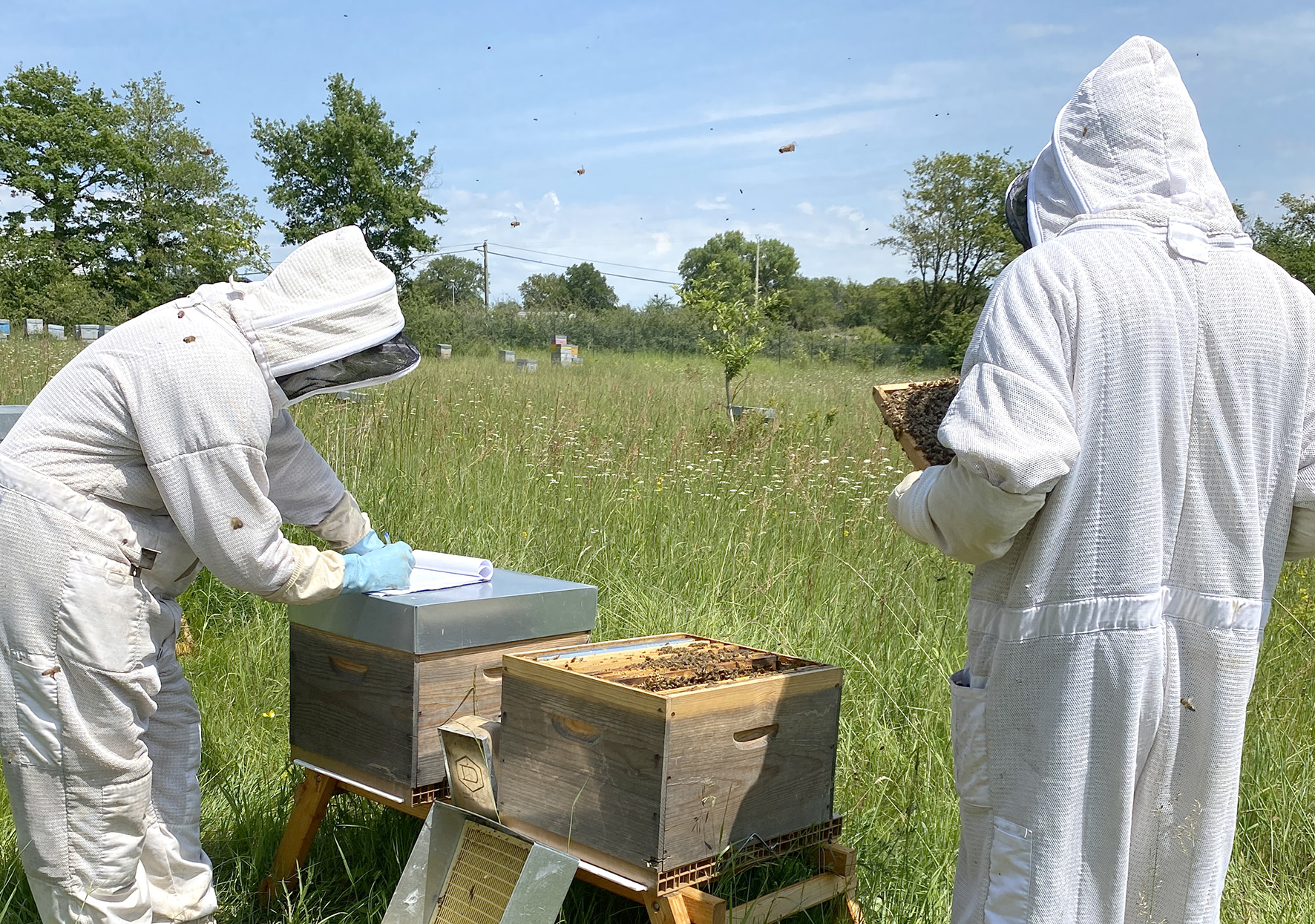
For each study, specific tasks are defined and scheduled over time. During visits to the study apiary(ies), we use a study logbook to record all observations.
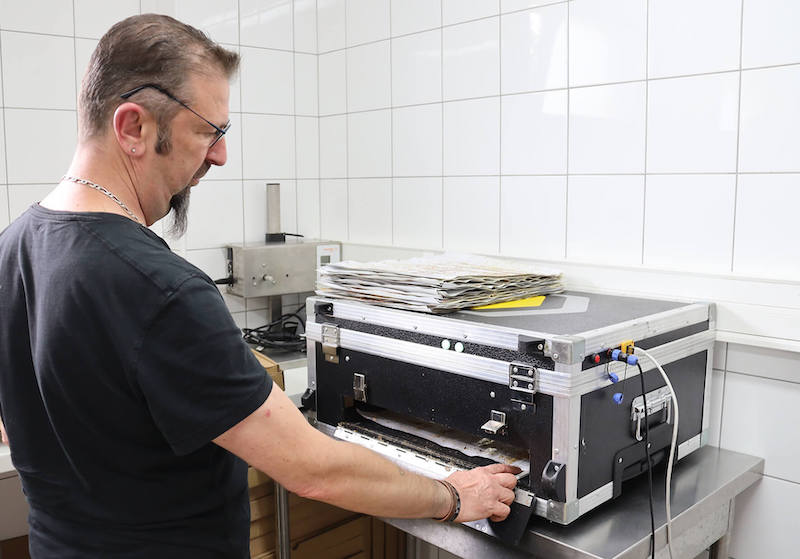
As part of our efficacy studies, we have chosen to use the Apisfero scanner to analyse bottom boards and automatically and reproducibly count fallen varroa mites. This technology has been internally validated for use and is essential, as it allows studies to be conducted with a much larger number of colonies. This solution is also offered to our partners when setting up collaborative studies.
Varroa checks: the cornerstone of health monitoring
We perform varroa counts at least monthly using our varroa scanner throughout the beekeeping season. This allows us to monitor varroa infestation and select colonies for future studies. All our hives are fitted with fully ventilated, sliding floors. We use adhesive paper sheets instead of greased pads, which saves us a significant amount of time in the apiary.
During efficacy studies, the counting frequency is significantly increased: counts are often conducted daily at the start of the study, then every three days, and finally on a weekly basis.
These methods are sometimes used alongside counting on cloths, depending on the study’s objectives. The powdered sugar technique, in particular, is employed to collect the mites needed for our molecule screening program.
Monitoring the growth of the colonies
We assess the strength of the colonies using the ColEval method. This technique allows us to estimate the areas of the frames occupied by bees, open brood, sealed brood, honey, and pollen.
We use electronic scales for some of our experiments, mainly those focused on bee nutrition. These scales allow us to non-invasively track whether a colony is gaining or losing weight. However, the measurement is of the total weight, making it challenging to distinguish between that of the bees, honey, and pollen.
Data processing and consolidation
All the data collected during the study is reviewed and then analyzed statistically. The results will confirm or reject the product formulation under testing according to the required regulatory specifications.
Indeed, studies designed to assess the effectiveness of a treatment against varroa must adhere to the European veterinary medicine guidelines for bees. There are established criteria for evaluating efficacy:
However, it is also important to think further and consider certain solutions as complementary to other medications.
Conducting a beehive trial is a demanding process that requires scientific rigor, field expertise, and meticulous logistical planning. From carefully selecting colonies to performing the final statistical analysis, every stage is designed to ensure results that are reliable, reproducible, and truly representative of real-world conditions.
At our company, this methodological approach allows us to develop and assess solutions for controlling varroa mites that meet beekeepers’ expectations, while respecting the complex biology of the bee colony. The data generated are not just numbers—they form the scientific foundation upon which our development decisions are based, with a constant focus on sustainability and performance in support of bee health.
Coming soon: a video series exploring the behind-the-scenes process of creating a bee-based medicine on our YouTube channel.
 by Véto-pharma
  by Véto-pharma