by Véto-pharma
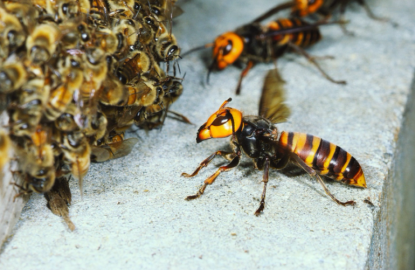
 The Asian hornet Vespa velutina is a major predator of honey bee colonies and represents a growing threat to French beekeeping operations. Two periods of the year are particularly sensitive because they correspond to key phases in the hornet’s biological cycle and to moments of vulnerability for honey bee colonies:
The implementation of targeted trapping systems represents a valuable management tool, provided that sufficient selectivity is ensured in order to limit impacts on non-target insects, particularly pollinators.
In this context, the evaluation of trapping solutions specifically designed to target Vespa velutina while reducing collateral captures appears to be a priority for the beekeeping sector.
The trial presented here is a multicentric field study conducted in spring 2025. It was implemented around apiaries, rather than directly within them, in order to account for the relatively low predation pressure observed at this time of year. The primary objective of the protocol was to assess, under real field conditions, the selectivity of the VespaCatch Select trap when used in combination with a single attractant developed by Vétopharma. This attractant, based on a sugar substrate whose effectiveness depends on ambient temperature, was used in order to standardize trapping conditions.
The study also aimed to document the capture performance for Vespa velutina, while quantifying and characterizing non-target insects captured. Secondary objectives included analyzing regional variability in performance according to hornet pressure levels and collecting user feedback regarding ease of use of the device.
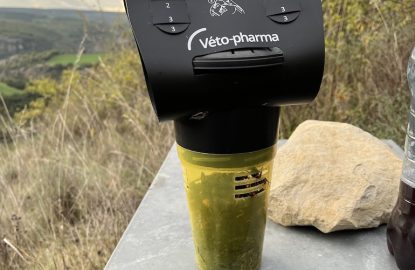
The trap evaluated was the VespaCatch Select (Vétopharma), equipped with a collection cup and an adjustable entrance system (11 mm, then 10 mm and 9 mm during the trial) in order to optimize Asian hornet capture while limiting the entry of smaller insects. It was used with a ready-to-use Vétopharma attractant, replaced every two weeks depending on climatic conditions.
The trial was conducted in spring 2025 over a period of 8 weeks in four French regions: Brittany (121 traps), Grand Est (5), Occitanie (106), and Pays de la Loire (121). Traps were installed around apiaries at a height of 1.5 m, sheltered from wind and, where possible, placed on flowering trees. Repositioning every two weeks was recommended to maintain attractiveness.
The monitoring period extended from Day 0 to Day 56, with weekly inspections from Day 7 to Day 56. At Day 14 and Day 28, the attractant was renewed and the entrance diameter reduced. For safety reasons, trap contents were drowned before sorting.
At each visit, the trappers filled out a standardized logbook:
Effectiveness and selectivity indicators were then calculated for each region.
The results show that the capture efficiency of the VespaCatch Select trap varies by region, primarily reflecting differences in hornet pressure and foundress emergence during spring 2025. The mean number of Asian hornets captured per trap was approximately 9.63 in Brittany, 9.5 in Occitanie, 4.79 in Pays de la Loire, and 4.6 in Grand Est. In the first three regions, hornet pressure was significant, with regular captures throughout the eight-week period, indicating a level of attractiveness that can be considered high for the trap–attractant combination. In Grand Est, hornet pressure was very low, limiting interpretation of the data from this region.
Hornets trapped | ||
Region | # Trap | Average |
Brittany | 35 | 9.63 |
Grand Est | 5 | 4.6 |
Occitanie | 106 | 9.5 |
Pays de la Loire | 121 | 4.79 |
Table 1: Average capture of Asian hornets per trap.
Selectivity was assessed using an index reflecting the proportion of Vespa velutina relative to non-target insects captured. Mean selectivity indices were 44.34% for Brittany, 38.79% for Occitanie, 53.80% for Pays de la Loire, and 6.38% for Grand Est. In the three regions with marked hornet pressure (Brittany, Occitanie, and Pays de la Loire), the selectivity index ranged from approximately 39% to 54%, corresponding to selectivity considered good to very good for Vespa velutina, with a limited proportion of non-target insects in total captures.
| Region | Vespa velutina | Vespa crabro | Diptera | Bumblebees | Bees | Wasps | Butterflies | Others | Non-target Insects |
|---|---|---|---|---|---|---|---|---|---|
| Brittany | 337 | 24 | 279 | 1 | 0 | 42 | 3 | 22 | 371 |
| Grand Est | 23 | 36 | 10 | 1 | 7 | 57 | 6 | 12 | 129 |
| Occitanie | 1001 | 208 | 687 | 14 | 148 | 361 | 33 | 188 | 1639 |
| Pays de la Loire | 579 | 55 | 386 | 3 | 4 | 40 | 13 | 229 | 730 |
Table 2: Summary of catches by region and species.
Non-target captures consisted mainly of wasps, flies, and other opportunistic insects, while the number of honey bees and other pollinators remained limited, confirming the relevance of entrance size calibration.
Selectivity performance varied between regions. Brittany (1.1) and Pays de la Loire (1.3) showed the most favorable ratios, with approximately one non-target insect per hornet captured, indicating good device selectivity. Occitanie (1.6) showed intermediate selectivity. In contrast, Grand Est (5.6) displayed markedly lower selectivity, with approximately six non-target insects per hornet captured. Interregional interpretation should remain cautious, as local Vespa velutina pressure, phenology, climate, and trap positioning (particularly proximity to flowering trees) strongly influence this indicator. Furthermore, the small number of traps in Grand Est (n = 5 in this trial) makes the ratio more unstable and potentially overestimated when hornet abundance is low.
Field observations indicated good structural stability of the traps under outdoor conditions, with satisfactory resistance to weather exposure throughout the eight-week monitoring period. Maintenance requirements were considered low to moderate by users, mainly involving attractant renewal every two weeks, progressive adjustment of entrance diameter, and sorting of captures during weekly inspections. The easily removable collection cup facilitated monitoring and cleaning, contributing to practical routine field use.
Overall data confirm that the VespaCatch Select trap effectively captures Vespa velutina, particularly in regions characterized by high hornet pressure such as Brittany, Occitanie, and Pays de la Loire. Interregional variability in capture numbers is primarily explained by differences in hornet population density during the trapping period, rather than intrinsic limitations of the device, as illustrated by the Grand Est region where low captures corresponded to very low hornet pressure.
Selectivity index values ranging from approximately 39 to 54 in high-pressure regions demonstrate a balanced compromise between capture efficiency and limitation of non-target insect captures. The progressive reduction of entrance size from 11 mm to 10 mm and then to 9 mm, together with the characteristics of the attractant, appears to contribute significantly to this selectivity profile by reducing the likelihood of entry by certain pollinators and smaller insects. From a beekeeping management perspective, these results are consistent with the selectivity requirements expected for trapping systems recommended within collective control plans targeting Vespa velutina.
Compared with devices already referenced under hornet control programs, available field data suggest that the selectivity of the VespaCatch Select trap is at least comparable, while providing notable attractiveness in high-pressure areas. Altogether, these elements position the trap as a valuable tool to be integrated into an overall Integrated Pest Management strategy combining targeted trapping and nest destruction.
The 2025 trial demonstrates that the VespaCatch Select trap is an effective and generally selective tool for managing the Asian hornet in apiary environments. Its use is particularly relevant in spring during the foundress phase. Installation at a height of 1.5 m above ground, in a sunny and wind-sheltered location, combined with repositioning every two weeks, allows capture optimization. The device’s performance also depends on regular renewal of the attractant and progressive adjustment of entrance diameter. However, this trap should be integrated into a comprehensive management strategy including monitoring, nest detection, and nest destruction. Future optimizations may focus on refining trapping calendars and adapting deployment more precisely to regional hornet pressure levels.
 by Véto-pharma
  by Véto-pharma