by Véto-pharma
 Have you ever used oxalic acid trickling to treat your honey bee colonies against Varroa?
Most European beekeepers apply oxalic acid as a winter treatment (from late November to early January). A solution of oxalic acid is trickled directly onto the winter cluster. If beekeepers consider applying oxalic acid by trickling during the summer, certain precautions must be taken. As shown in this European case study, some preparatory steps are required prior to treatment application, as well as careful consideration of several factors in order to achieve optimal efficacy. In this case study, we highlight the key steps for a successful application of oxalic acid in summer, a period during which brood is present in the colonies.
This case was reported to us by a veterinarian at the end of August. She had visited the beekeeper the previous week to monitor varroa infestation levels and to prescribe a varroa treatment for late summer, which the beekeeper intended to apply in early September. This timing is generally considered somewhat late in the season for Europe, as treatment is usually recommended in late July or August. However, this beekeeper had already treated his colonies by applying an oxalic acid solution after the spring honey flow in June.
“Given the timing of the oxalic acid application and the fact that the queens had been caged beforehand, the colonies should currently be in good health, with low infestation levels. But the varroa infestation I observed last week was catastrophic!” This is how the veterinarian described a case of low efficacy following oxalic acid trickling in summer.
As always, we take feedback from veterinarians, beekeepers, beekeeping technicians and other reporters very seriously, and we investigate possible causes while following the principles of pharmacovigilance (PV).
Generally, the first step in this process is to determine the status and strength of the affected colonies prior to treatment application. In this case, that meant going back to early June, when the beekeeper decided to cage the queens in order to obtain broodless colonies during the summer.
This method is fairly common in several European countries, such as Italy. The idea is to force varroa mites out of their usual refuge during the season, namely sealed brood cells. Once brood has been eliminated, due to the interruption of egg laying by the queen for approximately 25 days (+/– a few days, depending on local recommendations), the beekeeper can apply an oxalic acid–based treatment with optimized expected efficacy (Gregorc et al., 2017; Jack et al., 2020).
Even before knowing the exact timing of the treatment, one crucial detail stood out: the beekeeper had caged his queens for only 20 days. Research consistently shows that this caging duration is insufficient to achieve complete brood absence. Worker brood requires 21 days to emerge, and drone brood even longer (on average 24 days). Most guidelines and studies recommend caging queens for at least 24 to 25 days to ensure that all sealed brood has emerged before oxalic acid application (Jack et al., 2020; Gregorc et al., 2017; Véto-pharma, 2022). Shorter caging periods leave sealed brood cells, which act as refuges for Varroa mites during treatment application and significantly reduce treatment efficacy.
Samples collected in early June using the alcohol wash method revealed alarmingly high infestation rates: between 6 and 9 Varroa per 100 bees, with some colonies even exceeding 10% infestation. By comparison, European recommendations, such as those from GDS Occitanie (France), set treatment thresholds at 3% in May–June, increasing to 4% in July–August (GDS Occitanie, 2022). In Germany (LWG Bayern), thresholds for alcohol washes are defined as follows: 3 to 20 mites per 300 bees (≈ 1 to 6.7%) as the intervention threshold, and >20 mites per 300 bees (>6.7%) as the critical threshold (LWG Bayern, 2023). Another German publication recommends a summer treatment threshold of 3% infestation in June (≈ 3 Varroa per 100 bees), increasing to 4–6% in July (Rosenkranz et al., 2010).
Starting treatment with infestation levels as high as those observed in this case considerably reduces the likelihood of success, even under ideal conditions.
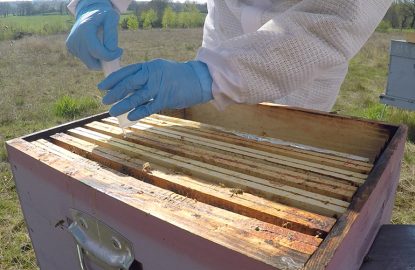
The beekeeper followed the European-approved protocol for applying the oxalic acid–based veterinary medicinal product, presented as a solution containing oxalic acid, sucrose and glycerine. Application was carried out according to label instructions: 5 ml per seam of bees, applied between the frames (BeeSafe, 2021). However, the timing added another layer of complexity. The oxalic acid solution was applied around midday, on a mild but sunny summer day, during the third week of June. While weather conditions were suitable for hive manipulation, they were far from ideal for treatment efficacy.
At midday, foraging activity reaches its peak, meaning that a significant proportion of worker bees were outside the hive collecting nectar, pollen or water. Oxalic acid application relies on uniform distribution throughout the colony, and without the full bee population present inside the hive, many individuals were not exposed to the treatment. This factor alone could have substantially reduced overall treatment efficacy (Berry et al., 2023; Véto-pharma, 2022).
The veterinarian recalled her surprise during the follow-up visit:
“I expected to see a low mite count after queen caging and oxalic acid application. But when I saw 8 mites per 100 bees in the first sample, I immediately knew that something had gone terribly wrong,” she told us.
The beekeeper also expressed his frustration:
“I did everything by the book: I caged the queens, waited 20 days, and used the correct dose. I thought applying the treatment on a sunny day would be perfect. I never imagined that foragers being outside the hive could make such a difference,” he said.
In this case, high initial infestation, insufficient brood interruption, and inappropriate timing of application compromised treatment success. The outcome was predictable: varroa levels rebounded rapidly, leaving colonies vulnerable and requiring immediate intervention after the veterinarian’s visit in late August. The beekeeper and veterinarian met again just two days after their August visit. They decided it would be safest to take no risks and apply Apivar® the same day, ensuring correct strip placement to maximize contact with bees. The veterinarian emphasized the importance of monitoring Varroa fall during the treatment period and planning a follow-up oxalic acid treatment in winter to ensure low infestation levels before spring.
We hope this case highlights how application timing (even the time of day!), the amount of brood present in the colony, and the level of infestation can critically influence the success of varroa treatments. Sometimes, even when beekeepers follow label instructions, respect dosage and use registered veterinary medicines, pitfalls remain that can undermine treatment efficacy. While the beekeeper’s intention to create broodless colonies was commendable, the shortened caging period and midday application ultimately provided varroa mites with safe refuges in residual brood and on foragers outside the hive. This example reminds us that successful varroa control depends not only on the treatment itself, but also on precise timing and careful preparation throughout the season.
References
 by Véto-pharma
  by Véto-pharma