by Véto-pharma
Amitraz is used worldwide to control Varroa mites. As reports of amitraz-resistant Varroa populations increase, more and more beekeepers are turning to rapid laboratory assays to find out whether the mites in their colonies are still susceptible.
A study published in September 2026 in Frontiers in Bee Science, conducted by researchers at the University of Florida and the Florida Department of Agriculture, compared one such assay with real-world results in the apiary1. The finding: the assay identifies resistant mites very effectively, but it did not predict how well treatment actually worked in honey bee colonies.
Amitraz belongs to the formamidine family. It binds to octopamine receptors in Varroa mites, overstimulating their nerve cells and causing paralysis followed by death2,3. In the United States, beekeepers have had access to an amitraz-based Varroa treatment since 20134.
Resistance is nothing new. American beekeepers long relied on coumaphos and fluvalinate, and Varroa mites quickly developed resistance to both active ingredients5,6. Until recently, reported cases of amitraz resistance in the United States remained relatively uncommon7.
In some mites suspected of being resistant, mutations have been identified in a gene encoding an octopamine receptor (Oct-β2R). However, these mutations do not tell the whole story: they are sometimes found just as frequently in resistant mites as in susceptible ones.
Six mutations have been identified worldwide. In North America, only one is currently associated with amitraz resistance: the Y215H mutation7. Its frequency varies considerably between regions. In Alberta, Canada, it was found in 31.75% to 95.67% of mites, depending on the area, in 20228.
The Y215H mutation was not detected in European Varroa populations when researchers screened for it.9,10 Other mutations have, however, been reported in Europe.
The research team worked in a University of Florida apiary in Gainesville in December 2023 and again in December 2024. They selected heavily infested colonies that had not been treated for at least six months and assessed amitraz efficacy at three levels.
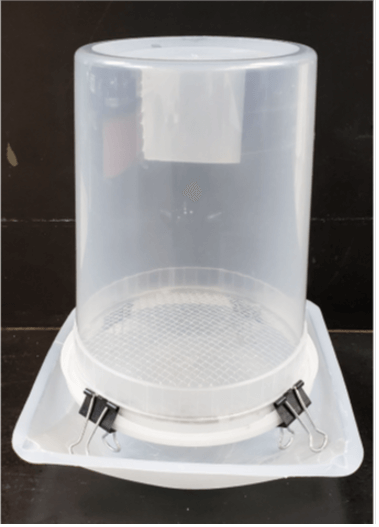
Assay results varied widely between colonies. Mite susceptibility ranged from 27.6% to 88.0% in 2023 (48.5% on average) and from 21.4% to 94.7% in 2024 (57.4% on average). In other words, based on the assay alone, most colonies would have been expected to respond poorly to treatment.
In the laboratory, the assay performed well at identifying resistant mites. Across both years, 94.6% of mites that survived the assay carried the Y215H mutation. It was less reliable in the opposite direction: only 66.8% of mites that died during the assay were genetically susceptible.
Based on these results, researchers estimated that 70.5% of mites carried the resistance mutation in 2023, compared with 48.2% in 2024. Mites carrying only one copy of the mutation (heterozygotes) were uncommon, and had approximately a 50% chance of surviving the assay.
In the apiary, however, the picture was very different. In 2024, colonies were divided into three groups: low expected efficacy (25 colonies), high expected efficacy (7 colonies), and untreated controls (12 colonies). After 42 days of treatment, infestation levels had fallen by an average of 98.2% in treated colonies, in both groups, regardless of the assay result. In untreated colonies, the change over the same period was not significant (−23.0%).
The authors’ conclusion is clear: the laboratory assay is a good predictor of the resistant genotype, but it cannot predict amitraz efficacy in the apiary. A similar finding had already been reported in France, where a mutation was present in Varroa populations without reducing treatment efficacy in field trials12.
The authors remain cautious: their study involved a small number of colonies in Florida, where brood is present throughout winter. Nevertheless, their findings are consistent with a French study: a mutation associated with amitraz resistance was present in Varroa mites without reducing treatment efficacy in apiary trials12.
To explain the difference between laboratory and field results, they suggest two possible factors: the season in which treatment was applied (winter), and its duration. Over 42 days, mites may be exposed to effects that a three-hour laboratory assay cannot necessarily capture.
For beekeepers, the message is simple: a laboratory assay result or the presence of a mutation is not enough to conclude that treatment will fail. To find out whether a treatment has worked, there is no substitute for checking Varroa infestation levels after treatment.
 by Véto-pharma
 by Véto-pharma