by admin
This article summarises a more comprehensive version published in french magazine « Abeilles & Fleurs » No. 896 (October 2026). It is the first in a series that will be published on this blog over time.
Sébastien Cano, the author of this article, is a beekeeper. He manages Véto-pharma’s 400 honey bee colonies and conducts field trials as part of our innovation projects.
Periods of extreme heat are becoming more frequent, occurring earlier in the season, and lasting longer. As a result, vegetation cycles are changing, and flowering periods may occur several weeks earlier than in the past. For honey bee colonies, these changes profoundly affect annual colony dynamics and brood rearing. These new environmental conditions disrupt resource availability, nectar flows, and pollen production, while increasing water requirements for hive thermoregulation. To cope with these changes, beekeepers have several management tools at their disposal. Apiary location, water availability, floral resource diversity, and adaptive beekeeping practices can all help colonies withstand periods of extreme heat.
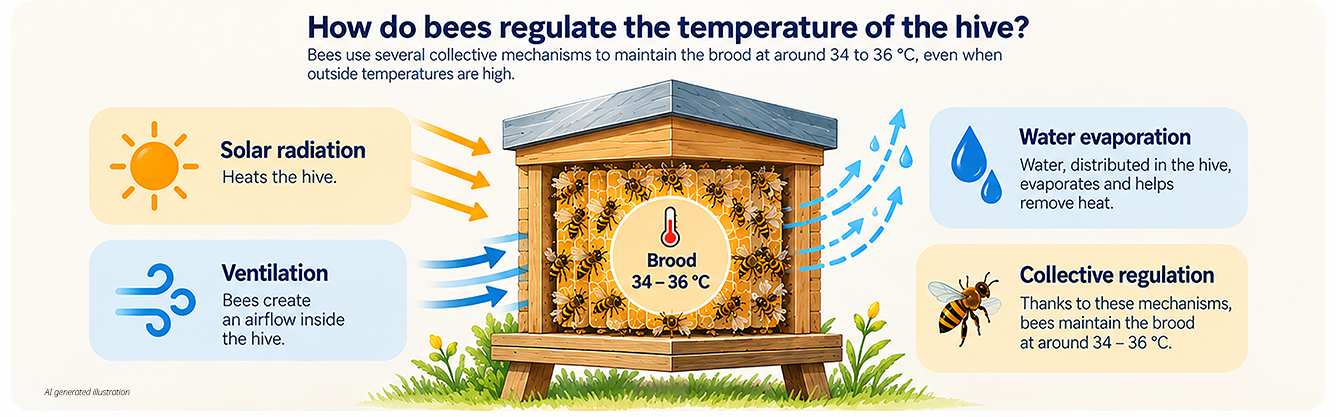
Apis mellifera (the honey bee) possesses remarkable adaptive abilities. Worker bees maintain brood temperature between 34°C and 36°C (93°F-97°F) through sophisticated collective behaviour combining fanning, evaporative cooling, and heat production.
However, thermoregulation requires significant energy expenditure and sufficient resources. When temperatures remain high for several consecutive days, the apiary environment becomes a major factor in helping colonies cope with heat stress.
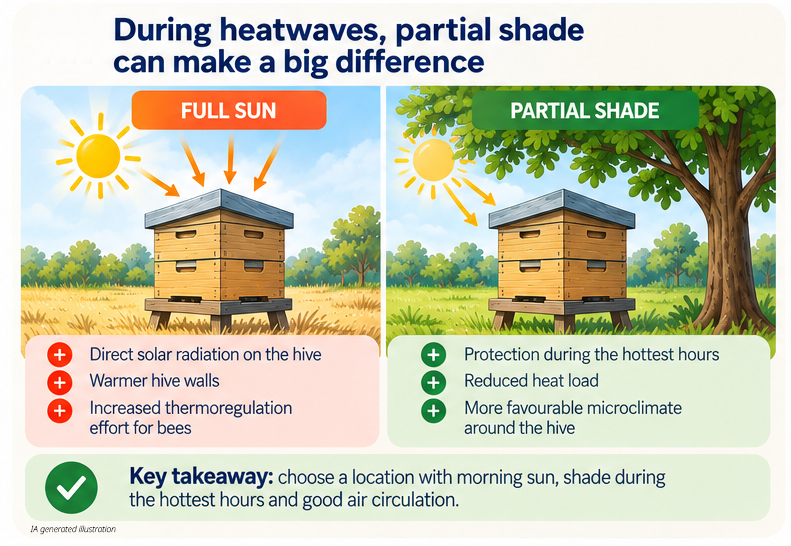
For decades, selecting an apiary site followed a simple principle: maximise sun exposure to promote spring colony development, typically with south- or southeast-facing hive entrances. In a context of increasingly warm springs and earlier heatwaves, this strategy deserves reconsideration.
Considering soil characteristics
Ground conditions also influence the microclimate surrounding hives. Mineral surfaces such as concrete or asphalt absorb and radiate heat, whereas grass-covered or vegetated ground helps reduce heat buildup and supports more favourable environmental conditions.
Choosing locations with good air circulation
Establishing an apiary in a low-lying area where hot air accumulates, or behind barriers that completely block airflow, can intensify heat stress. In contrast, a site benefiting from gentle air circulation, while protected from constant prevailing winds, can provide a more favourable microclimate for honey bee colonies.
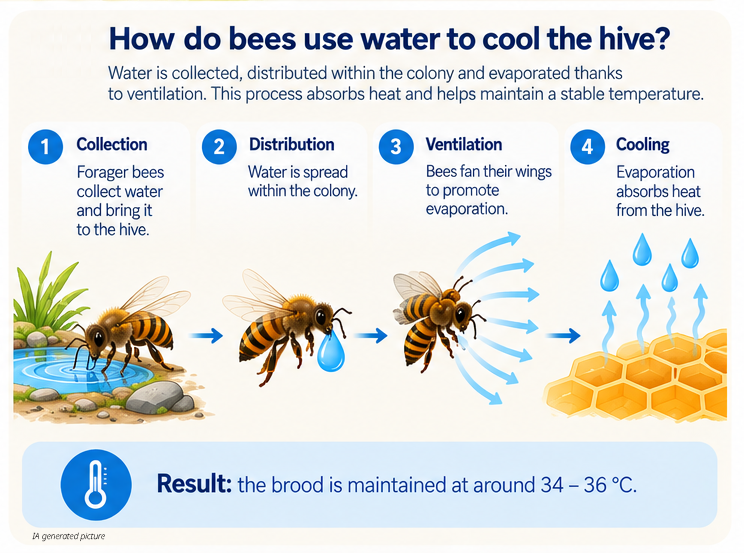
Access to water becomes increasingly important as temperatures rise. Honey bees use water as part of the colony cooling process: foragers collect and bring water back to the hive, where evaporation combined with collective fanning helps regulate internal temperature. During drought periods, however, natural water sources may become scarce. Providing a clean, permanent, and easily accessible water source can therefore be highly beneficial.
Floating supports or landing materials that allow bees to safely access the water can help prevent drowning.
To learn more, read our article: Water is life, and for bees too!
Extreme heat affects more than just hive temperature. It also impacts the floral environment on which colonies depend.
As soils dry out, some flowering plants may bloom for shorter periods or produce less nectar. As a result, resources become more irregular and less predictable. This shift can significantly affect colony dynamics. A sudden interruption in nectar flows may reduce nectar and pollen intake precisely when colony needs remain high.
To learn more, read our article: Honey bee colony starvation during the season
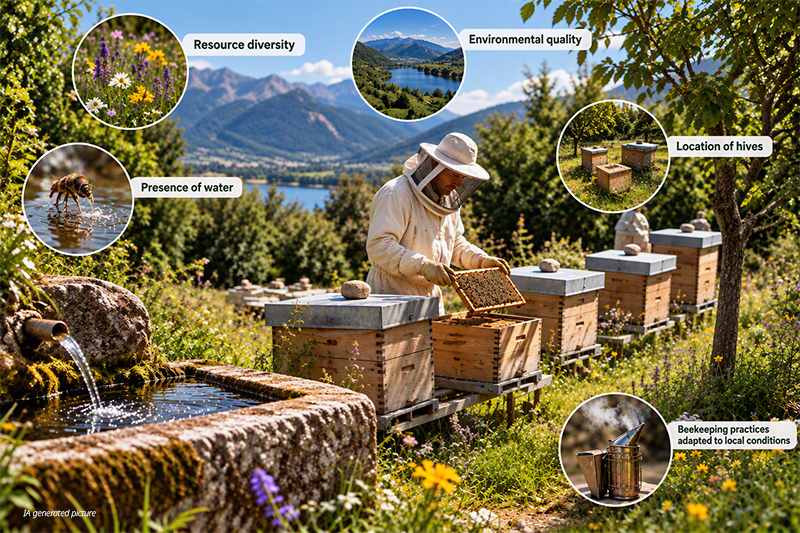
The objective is not necessarily to increase the number of interventions, but rather to improve observation of colonies and their environment in order to take action at the right time. Climate change is gradually challenging long-established beekeeping habits. Hive exposure, once selected primarily to maximize sunlight, must now also take into account extreme heat events and water availability.
The best apiary is therefore not necessarily the one that receives the most sunshine, but the one that enables colonies to maintain both thermal and nutritional balance throughout the beekeeping season.
Read the full article by Sébastien Cano in the October 2026 issue of Abeilles & Fleurs, and stay tuned for Part 2 of this series dedicated to the impact of heatwaves on honey bee colonies.

 by Véto-pharma
 by Véto-pharma