by Véto-pharma
 A healthy gut is essential for honey bee wellbeing. The gut microbiota, the community of microorganisms living inside the bee’s digestive system, performs several biological functions:
Several stress factors can disrupt this balance: environmental changes, pesticide exposure, disease, or poor nutrition. When the balance breaks down, bees can develop gut dysbiosis, a state where harmful bacteria outcompete beneficial ones.
Dysbiosis can lead to weakened immunity, reduced nutrient absorption, and digestive issues that lower overall health and lifespan. These effects can weaken the whole colony, especially during demanding periods such as overwintering or pesticide exposure.
Pediococcus acidilactici is a beneficial bacterium and a member of the lactic acid bacteria (LAB) group:
It adapts to the intestinal environment of several host types, and its experimental use in bees has shown promising results, improving survival when bees are exposed to stressors.
Recent research points to clear benefits of Pediococcus acidilactici for both individual bee health and colony performance.
Supplementation with Pediococcus acidilactici helps stabilize the bee gut microbiota and build a more connected microbial network. Gaubert et al. (2024) reported a more resilient microbiota structure, with a more connected network of interactions between bacteria, in colonies given the probiotic.¹ The reduction of negative interactions within that network was a favorable trend (p = 0.058).
This enhanced stability is especially valuable during the wintering period: a time when digestive issues are common and can jeopardize colony survival.
“This probiotic improves the stability of the interaction network within the microbiota, in line with the alpha diversity results, and could therefore be linked to the better resiliency after wintering recorded for this group”1
Sbaghdi et al. (2024) showed that after dysbiosis was induced by a stressor, Pediococcus acidilactici brought the microbiota back toward a state close to the control.³ This corrective effect matters most during overwintering, when digestive issues are common and can jeopardize colony survival. Pediococcus acidilactici has also been shown to mitigate the side effects of antimicrobial treatments by restoring the gut microbiota.
Bees receiving Pediococcus acidilactici tolerate environmental challenges better. In Peghaire et al. (2020), co-exposure to two pesticides, the insecticide thiamethoxam and the fungicide boscalid, was clearly harmful to honey bees.² Under that co-exposure, mortality reached 41%. With Pediococcus acidilactici, mortality dropped to 15%, and survival returned to the level of unexposed control bees.
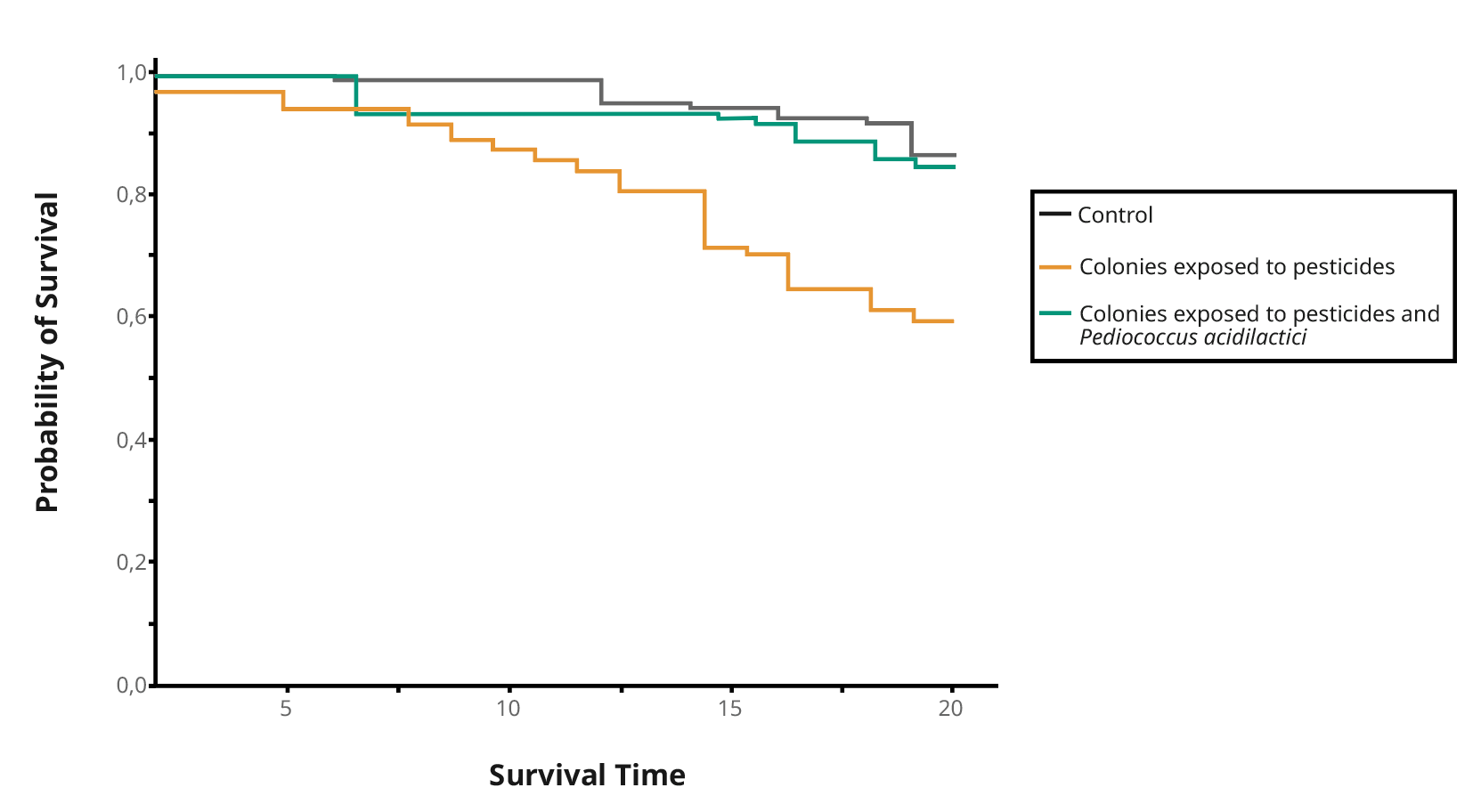
In the same study, of the five probiotics tested, Pediococcus acidilactici was the most effective at helping bees maintain survival under parasite and pesticide stress.² Supplemented bees lived markedly longer: their lifespan was 2.3 times that of unsupplemented stressed bees when the probiotic was provided before exposure, and 1.7 times when it was provided afterwards. It also restored the expression of antioxidant and immune genes disrupted by infection or pesticides, which helps limit the oxidative stress that harms bees.
When given before winter, Pediococcus acidilactici supports a stronger start to the season. Gaubert et al. (2024) found that colonies supplemented before wintering came out of winter with a higher number of bees, and the authors suggest the probiotic could be used as a food supplement before wintering to improve spring recovery.¹
This fits a wider body of evidence on winter survival itself. El Khoury et al. (2018) reported that supplementation improved the survival of infected bees by 26.3% from day 14 to the end of the trial.⁴ Bleau et al. (2023) found a significant increase in sealed brood area in spring for supplemented colonies over a six-month period spanning winter and early spring.⁵ Together, these results link the probiotic to better overwintering outcomes and a faster spring rebound.
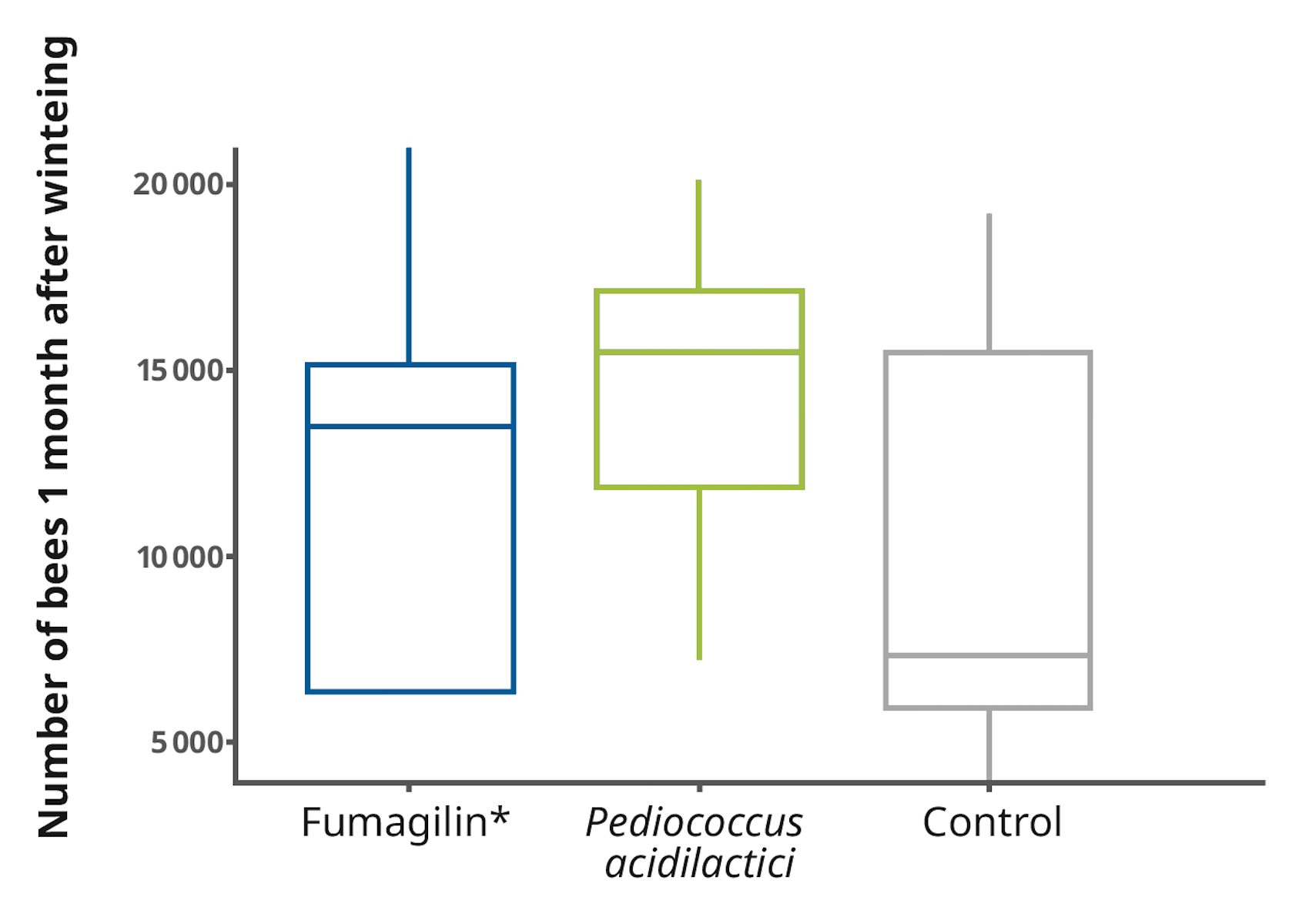
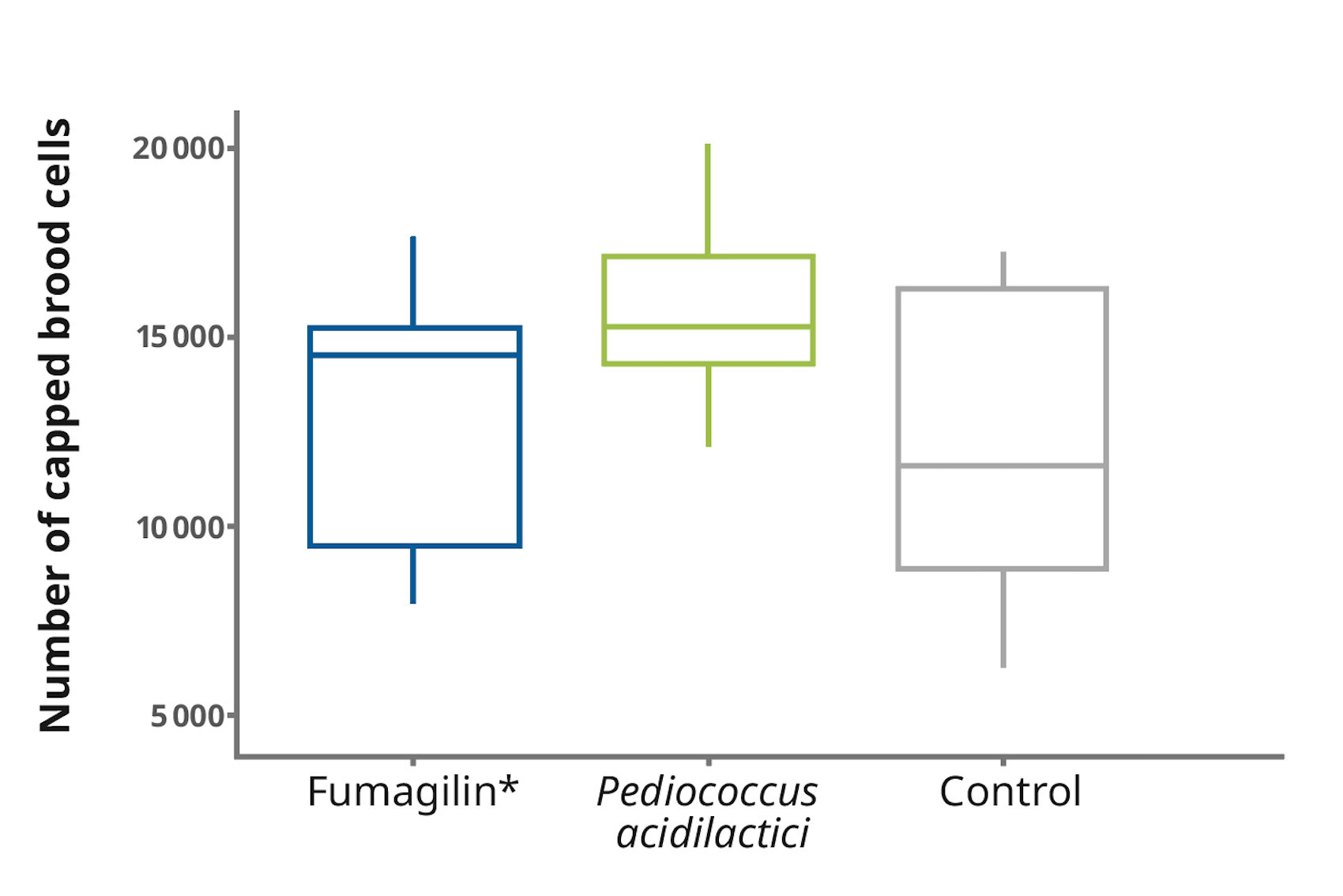
Colonies supplemented with Pediococcus acidilactici show stronger development. Gaubert et al. (2024) recorded a significantly higher number of adult bees per colony, along with a favorable trend on the number of capped brood cells (p = 0.052), two indicators of a healthier, more productive hive.¹
At the individual level, healthier bees mean less mortality and fewer hygienic tasks (such as removing dead bees), so the colony can focus its workforce on its core tasks, including pollination and honey production. By improving bee health individually, a balanced microbiota supports colony performance overall.
Bactobee® puts this science to work in a form that is easy to use at the hive. It is a complementary feed for honey bees built around Pediococcus acidilactici, the same lactic acid bacterium described throughout this article, to support gut health and help colonies stay resilient in the face of environmental stressors.
What sets it apart: Bactobee is based on live bacteria, not on the dried fermentation products that many other probiotics rely on. Each 5 g application provides a measured dose of living Pediococcus acidilactici (1×10¹⁰ CFU/g), so bees receive an active culture rather than an inert one.
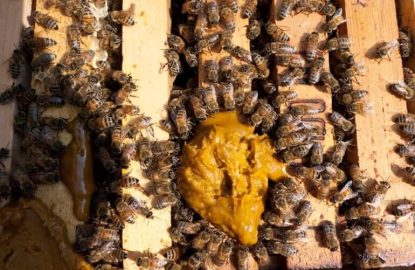
Using it is simple. One application is 5 g per colony, one dosing spoon (included), sprinkled on top of the frames near the brood, and it can be repeated after 30 days. Beekeepers can use it at the moments that matter most across the season:
Give your colonies a living probiotic before the season turns. Discover Bactobee®
References :
 by Caroline Lantuejoul
  by Véto-pharma
  by Véto-pharma